How Educator Professional Development Impacts STEM Workplace Readiness
Tuesday, March 31, 2026
In this companion piece to our entry, Workplace Readiness Requires Stronger STEM Education , discover how high-quality professional development (PD) for educators plays a critical role in preparing students for tomorrow’s STEM workforce.
Key Takeaways
STEM culture and identity start earlier than most people expect — and PD is the lever. Children as young as age six develop gender stereotypes about computer science and engineering, believing boys are more capable than girls, according to a study from the American Institutes for Research — though interestingly, math stereotypes are less gendered, showing kids don't view all STEM fields the same way. This makes early, well-trained intervention critical to keep students from self-selecting out of STEM before they've even had a real chance to explore it.
Content confidence among teachers is a major bottleneck. Just 31% of elementary school teachers report feeling very well-prepared to teach science, which the article ties directly to lost opportunities for exciting young students about STEM. Deep content knowledge lets teachers convey enthusiasm and clarity, and that translates into student engagement.
STEM identity is built on two psychological pillars — and PD shapes both. The article describes "typicality" (feeling you fit the traits of STEM people) and "centrality" (how much your abilities and beliefs align with the field, and whether you feel accepted by it) as the two forces that drive a student's sense of belonging in STEM. Teacher training focused on inclusive, student-centered instruction is framed as the mechanism that nurtures both.
The United States is falling behind in graduate workforce readiness, especially in jobs that require STEM knowledge and expertise. When faced with teacher burnout and educator shortages, teachers need high-quality professional development (PD) both to increase job satisfaction as well as to prepare students for the elevated STEM needs of the future labor force.
STEM Culture is the Foundation
So excellent STEM teachers can create engaging classroom environments with STEM lessons that get students excited; they need the support of a district-wide commitment to foster a STEM culture that permeates the school community.
Building a STEM culture doesn't happen overnight, and it can't propagate in silos. It is engineered primarily through the depth and quality of teacher professional development provided to educators at all grade levels — including the youngest students. One way that professional development can help build STEM cultures is by helping teachers recognize how to reinforce students’ sense of belonging in STEM. Neglecting to recognize and address STEM stereotypes early can hinder young students from pursuing STEM coursework and careers. Children as young as age six develop gender stereotypes about computer science and engineering, believing that boys are more capable than girls, according to a recent study from American Institutes for Research (AIR).
Interestingly, though, math stereotypes are less gendered, demonstrating that young children do not view all science, technology, engineering, and math fields as the same. This research reaffirms the critical need for PD that equips teachers with the confidence to apply science and engineering practices from the earliest grade levels onward.
A quality STEM curriculum goes beyond the subject matter and includes how people in your schoolwork together using STEM principles and collaborative scaffolding. Cultivating a school culture that promotes curiosity, experimentation, critical thinking, and continued growth is at the root of STEM workforce preparation.
Nurturing STEM Identity
One of the most powerful — and often overlooked — pathways connecting school culture to career outcomes is fostering STEM identity among all students, not just those who show proclivity toward it. Educators who train to nurture this shift in mindset elevate the long-term odds for student achievement, career fulfillment, and workforce readiness.
Fostering interest in science-related activities from an early age can positively influence students' career aspirations in STEM fields. As they develop genuine interest and become more confident in their own abilities, students are more likely to engage in experiments, research activities, and science events — perpetuating their interest, motivation, and sense of belonging in the STEM community.
Teacher professional development focused on student-centered, inclusive instruction equips educators to foster a sense of belonging among their students. Ultimately, each student's STEM identity is a multifaceted social identity driven by two key factors.
First, typicality is the belief that you are compatible with being a STEM student or professional because you see yourself as having the traits of those who work in STEM disciplines.
Second, centrality is essential to forming a strong STEM identity. Centrality is the level to which your beliefs, abilities, and knowledge align with STEM fields. It also relates to the feeling that members of the STEM discipline(s) are interested in currently accepting you or will accept you.
Connecting the Dots
NASA Astronaut Graduate, Andre Douglas, Ph.D., credits a calculus teacher with igniting his love of math by showing him how the concepts are simply the building blocks for so many powerful solutions.
"My teacher was there to share what you can do with this. Math was like a language. You can describe how particles move throughout the Earth in the universe. You can describe how cars work with respect to motion. It was just cool, and I knew if I could learn calculus, I could learn anything," Douglas said. "For me, math was just this concept using symbols and equations to describe what happens in the real world — and that blew my mind."
Douglas remembers her as very good at what she did and taught, which is why superior teacher professional development is such a gamechanger.
Deep Content Knowledge
Educators who are confident in their mastery of STEM subjects are better able to teach with enthusiasm and clarity, leading to greater student engagement. Unfortunately, one survey found that just 31% of elementary school teachers felt very well-prepared to teach science.
This lack of educator confidence and deep content knowledge, particularly for teachers of elementary grade levels, can become a missed opportunity to get young minds excited about the vast world of STEM learning.
Improving Pedagogical Content Knowledge
Today's students — who will become tomorrow's labor force — need to understand how the various STEM disciplines work together, along with strong literacy competence. For students to grasp this interdisciplinary competence, it's important to provide their teachers with integrated STEM professional development.
Impactful experiences in STEM methods courses equip educators to integrate standards from different disciplines better, resulting in increased self-efficacy in planning and using interdisciplinary teaching methods. This pedagogy prepares educators to nurture critical thinking and interdisciplinary problem-solving skills in their students.
Elevating Educators' PBL Skills
Another way of building students’ STEM identity is to provide hands-on, exploratory opportunities to see how STEM skills can help students solve real-world problems. Providing classroom teachers with advanced training in developing and utilizing project-based learning (PBL) can have a tremendous impact on students, encouraging problem-solving, collaboration, and critical thinking. Equipping and encouraging your teachers to build this into their pedagogy is a powerful way to engage students, especially those who may struggle with more traditional approaches to learning.
Experiential PD Is Powerful
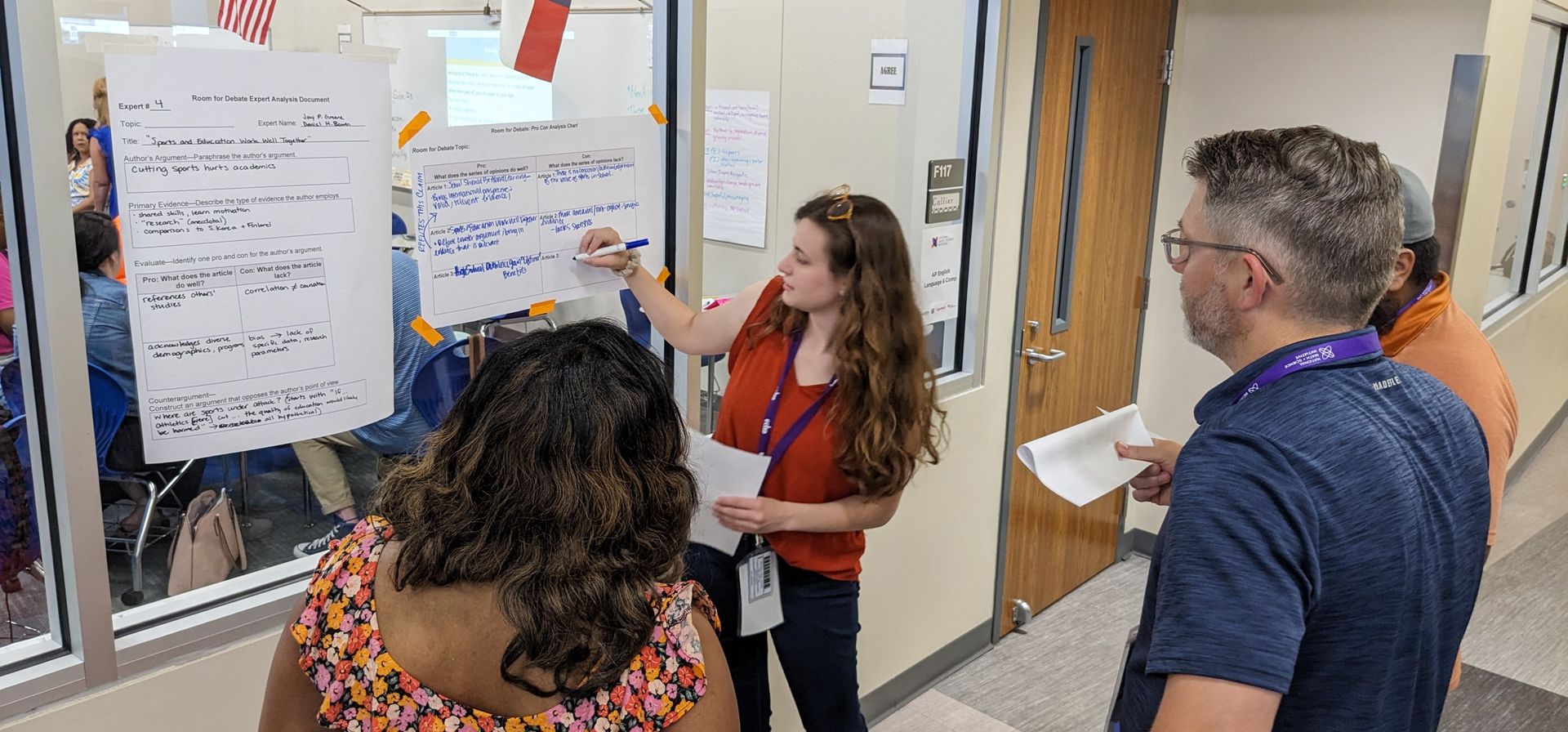
Designing professional development offerings with experiential learning as its foundation elevates teachers' pedagogy on STEM education. When teachers become students on PD days, they appreciate training that's engaging, interactive, and ignites their passion. Students feel the same way. Providing educators with experiential professional development allows them to organically reflect on their own experience and then create a similar environment for their students.
Career-Integrated Learning
Teachers who receive high-quality professional development focused on helping students take the necessary steps to achieve their career goals bring an extra element of engagement to the classroom.
Well-trained teachers know how to translate STEM concepts into tangible, career-relevant classroom experiences. Integrating career exploration, skill development, and individual feedback into classrooms provides equitable access to groups of students who may face structural and systemic barriers to STEM career pathways.
Pathways to Workforce Readiness
Developing a STEM-ready workforce is built upon rich, multi-layered pathways from teacher learning to student career readiness. And it all starts with quality professional development for educators. Equipping our educators with effective pedagogy, content knowledge, confidence, and interdisciplinary instruction skills puts us on the path to much-needed workforce preparation and readiness.
Frequently Asked Questions
Why can't STEM culture can't be built by individual teachers alone? Because it requires district-wide, cross-grade commitment rather than isolated classroom efforts — the piece states that building STEM culture "doesn't happen overnight, and it can't propagate in silos," and instead depends on the depth and quality of PD provided at every grade level.
What are "typicality" and "centrality," and why do they matter? They're the two components of STEM identity the article describes: typicality is seeing yourself as sharing traits with STEM people, and centrality is how much your abilities and beliefs align with the field plus whether you feel accepted by it. Together they shape whether a student sees themselves as "a STEM person," which influences long-term persistence in the field.
How does project-based learning (PBL) training for teachers help students? Advanced PBL training helps teachers create hands-on, real-world problem-solving experiences that build collaboration and critical thinking — and that this approach is especially valuable for students who struggle with more traditional instructional methods.
What real-world example does the article use to illustrate the impact of a great teacher? It cites NASA astronaut Dr. Andre Douglas, who credits a calculus teacher with sparking his love of math by showing him how mathematical concepts describe real-world phenomena — reframing math as a language rather than an abstract subject. (Read Stay Curious: A Conversation with 2024 NASA Graduate Andre Douglas, Ph.D.)
What's the core argument about "experiential" PD? That when teachers themselves become learners in engaging, interactive PD, they naturally reflect on that experience and recreate similar learning environments for their own students — modeling the same excitement and hands-on approach they were taught.